“I Can Get It Cheaper”: What Really Goes In to Pricing a Surveillance Investigation
Wondering why surveillance quotes vary or why “fixed packages” can be a red flag? We here at Anderson & Co explain exactly what goes into pricing a professional, court-ready surveillance investigation.
"Anderson & Co Surveillance And Private Investigators Ltd. Proud winners of The Best Private Investigation Company In Central England 2025/2026 and 2026/2027 - Prestige Awards UK"
Every private investigator has had this call; we certainly have and get them almost daily. A prospective client rings up wanting a fixed package, along with a guaranteed result, and a price that matches what they’ve seen advertised elsewhere. The problem is their information is vague and limited at best. When you try to explain why none of that is realistic in surveillance work, the conversation can turn hostile very quickly, and it usually ends with some version of the same line: “I can get it cheaper.”
We had exactly this conversation late last night. A potential client called asking for a fixed-price package with guarantees attached. When I explained, professionally and clearly, why we couldn’t offer either, she became abrupt and rude, told me she could get the job done cheaper elsewhere, and ended the call very abruptly. It’s a frustrating experience, but it’s also a useful one because it highlights a gap in public understanding that costs people money, time, and sometimes the outcome they were hoping for in the first place.
This particular case was genuinely difficult to scope because as mentioned the information she had was limited and vague. It might have taken one day of surveillance. It might have taken five. As with the majority of surveillance instructions, the true answer depends entirely on what the subject actually does, and nobody, however experienced, can know that in advance. Yet somewhere in this industry, companies are offering fixed, multi-day “packages” for jobs like this, priced before anyone has any idea how long the work will actually take.
Why Fixed Packages and Guarantees Don’t Work in Surveillance
Surveillance is not a service with a predictable, repeatable shape. Unlike, say, a fixed-fee document check or a standard background search, surveillance depends on the actions of a human being who has no idea they’re under surveillance and who is, by definition, unpredictable.
A subject might leave the house within the hour. They might not leave at all that day. They might change their routine entirely because of something unrelated to the investigation. None of this can be forecast with any accuracy before the job begins.
This is precisely why in these circumstances, a responsible, professional investigator will never guarantee a result, and will be cautious about guaranteeing a timeframe. Doing so would mean promising something entirely outside our control. In our conversation with this particular client, we were direct about this: it would be hugely unprofessional to use the word “guarantee” in relation to surveillance evidence, because no legitimate investigator can control what a subject chooses to do on a given day.
The client in question didn’t know several basic details about the quote she’d already been given elsewhere. She didn’t know whether it covered one operative or two, a detail that can double the cost and significantly change the likelihood of success. She didn’t know how long the operational days were meant to be. And she didn’t know whether a legally binding, court-ready report was even included in the price. These aren’t minor details; they’re the difference between a professional investigation and a very expensive disappointment. Despite all this, she thought she was on to a winner.
Dedicated | Diligent | Discreet
The Maths Simply Doesn’t Work
Ask yourself this: how can any company offer a three-day surveillance package on a tight budget without knowing, in advance, whether the job will take three hours or three weeks? The honest answer is that they can’t — not if they intend to deliver a genuine, properly resourced investigation. A fixed all in one package quoted before any assessment of the subject’s movements is not a professional quote. It’s a guess, dressed up as a guarantee, and it’s usually a guess made in the company’s favour, not the client’s.
In this case, we gave the client an honest day rate and recommended starting with a couple of days of surveillance. We were clear that this might be enough time to gather what she needed —or it might not. Very little was known about the subject’s movements at that stage, so no guarantee could honestly be made. What we could tell her was this: if the subject left the house and behaved as she expected, we would be in position to obtain evidence of it. That’s the honest limit of what any surveillance operative can promise on day one of an unknown case. By that point in the call, unfortunately, it was falling on deaf ears.
So What Actually Goes Into Pricing a Day of Surveillance?
This is the part of the job that people rarely see, and it’s the reason a day rate looks the way it does. A common assumption is that a surveillance quote is simply paying someone to sit in a car for a few hours and watch a house. I hear the old "I just need this" or "I just need that" all the time. So, here are some valid points that should be considered for any investigation whereby surveillance is required.
1. Pre-Operation Reconnaissance
In many cases, we’ll travel to the area the day before a job begins to carry out a proper reconnaissance. This means checking sightlines to the property, identifying realistic parking options that won’t draw attention, mapping entry and exit points, and noting anywhere a subject could realistically be lost (side streets, footpaths, multiple exits from a building, or blind corners).
Getting this wrong on the day of the operation can cost the entire job. It’s also worth saying that online mapping tools are a starting point at best; Google Maps imagery can be years out of date and often looks nothing like the current layout of a road, a driveway, or a development on the ground. There is no substitute for a physical, on-the-day assessment of the terrain. Many surveillance job's start in the early hours of the morning and therefore as mentioned we would do this the day before to allow us to prepare for when we go live the following day. Conducting the above an hour before an investigation goes live just adds unnecessary pressure to the job, limits time we have and of course can raise unnecessary suspicion and exposure.
2. Accommodation and Travel
Surveillance jobs are rarely conveniently located. Subjects live and work across the country, and sometimes internationally, which means hotels, fuel, mileage, tolls, and parking all have to be factored into the cost of a job before a single piece of footage has been captured. None of this is an optional overhead; it’s a direct and necessary cost of being in the right place, at the right time, ready to work.
3. The Surveillance Itself
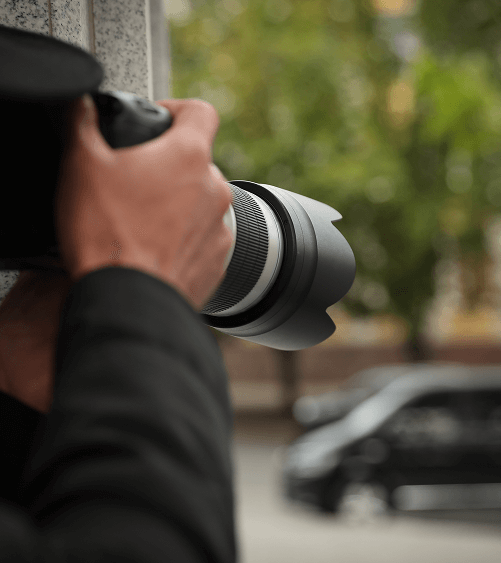
This is the part most people picture, but it’s only one piece of the day. It typically involves long hours, often spent stationary in the back of a vehicle or a discreet static position, remaining alert and inconspicuous for extended periods, and adapting instantly if the subject changes their plans, route, or behaviour. Concentration has to be maintained for the entire operational window, because a single missed movement can mean the difference between a successful day and a wasted one. One quick look at a Facebook post, or a WhatsApp message, you look up, the Subject has gone. It can happen, but it shouldn't.
4. Post-Operation Work
This is the part clients almost never see, and it’s often the most time-consuming stage of the entire process. At the end of a long operational day, there is still hours of further work to do:
Downloading and reviewing all footage captured, carefully selecting and logging the key evidential moments, and compiling a clear, professional, court-ready report complete with timestamps and images. A report that lands in a client’s inbox looking simple and concise usually represents hours of careful editing and writing behind the scenes.
By the time a finished report reaches a client, it typically represents a full day, sometimes closer to two of planning, travelling, watching, and writing. Not simply the hours spent physically on camera. On average it takes me approximately 3-4 hours at the end of each surveillance day to compile the surveillance report. Often we may hit the road at 4 or 5am, followed up with 10-12 hours surveillance and then getting home, or back to the hotel, to then having to compile the report, it can often be midnight or 1am before complete, and then having to get up and do it all again a few hours later - this is the reality when an investigation is done properly, professionally and thorough.
Birmingham | London | Manchester
Why “Cheaper” Often Means “Nothing at All”
This is the part of the conversation that matters most for anyone currently comparing quotes. If a company is offering a fixed surveillance package for a couple of hundred pounds, it’s worth asking, honestly, whether any of the above is genuinely included. In most cases, the answer is no.
- Was the area properly reconnoitred the day before, or is the operative arriving cold and
hoping for the best?
- Does the quote cover one operative, or two? Two operatives dramatically increase the chances of maintaining contact with a subject who moves unpredictably, but they also cost more (there is no way around that). In fact all mobile surveillance instructions should have two operatives as a minimum.
- Is a legally binding, court-admissible report actually included, or will you be handed a folder of unlabelled video files with no context, timestamps, or narrative?
- Is the operative insured and experienced enough to work safely and lawfully,
including compliance with relevant data protection and surveillance legislation?
- Has anyone explained, honestly, that a fixed number of days quoted in advance is not based on any real assessment of your specific case?
- Is the company you are talking to a Limited company with a physical office address and Google maps listing? If not, ask yourself why? Ask them why, too. If the job goes pair shaped, or they disappear, how will you get your money back? How will you leave them negative feedback to warn others?
- Unfortunately, in an unregulated or lightly regulated industry, there are companies willing to sell exactly this kind of package — low prices, bold guarantees, and reassuring promises to people who are often in emotionally difficult circumstances and simply want a fast, affordable answer.
Sadly, with many of these cases, clients end up with either an extremely poor-quality investigation, no usable evidence at all, or nothing whatsoever for their money. The guarantee that sounded so reassuring on the phone tends to evaporate the moment a refund is requested. You'll often then find they'll become aggressive, sometimes threatening and then cut contact. We hear these stories all the time from clients who have ended up in these unfortunate situations after initially thinking they were getting a deal.
How a Genuine Surveillance Quote Should Work
A professional and legitimate investigator should be able to explain, clearly and without defensiveness, exactly what is and isn’t known at the point of quoting. In the case described above, that meant offering an honest day rate rather than a package, and recommending an initial couple of days as a starting point, with the explicit acknowledgement that this may or may not be sufficient, depending entirely on how the subject behaves.
This approach isn’t about avoiding commitment. It’s about giving clients accurate information so they can make a properly informed decision, rather than being sold false certainty. A trustworthy and legitimate investigator will tell you what they can realistically deliver, what they can’t promise, and why — even when that’s a harder conversation than simply agreeing to whatever the client wants to hear.
It also means being transparent about what’s included from the outset: the number of operatives, the length of the operational day, whether a legally sound report is part of the service, and how additional days would be handled if the initial period doesn’t produce a conclusive result. None of this should need to be dragged out of an investigator with difficult questions. It should be offered as standard, before any commitment is made.
Leading | Established | Award Winning
The Bottom Line
Surveillance work is not cheap, but it is thorough, and in this industry, thoroughness is what actually produces results, whether the case involves a legal dispute, an insurance claim, a family matter, or simply peace of mind. A single day of surveillance represents reconnaissance, travel, hours of concentrated fieldwork, and hours more of careful evidential reporting afterwards. There is no version of that process that can honestly be delivered for the price of a takeaway dinner and few bottles of wine and any company suggesting otherwise is either misunderstanding the work involved or, more worryingly, has no intention of doing it properly.
If you’re currently comparing surveillance quotes, the cheapest option and the fixed “package” deal are worth treating with real caution. Ask the questions above. Ask what happens if the case takes longer than expected. Ask to see a sample of a previous report. A genuine, experienced investigator will welcome those questions, because they know exactly what goes into doing the job properly, and they’ll have nothing to hide in explaining it.
As always, if you feel like you may need the services of a Private Investigator then don't hesitate to get in touch. We are always on hand to at least advise,
And remember, if it sounds too good to be true, it normally is!